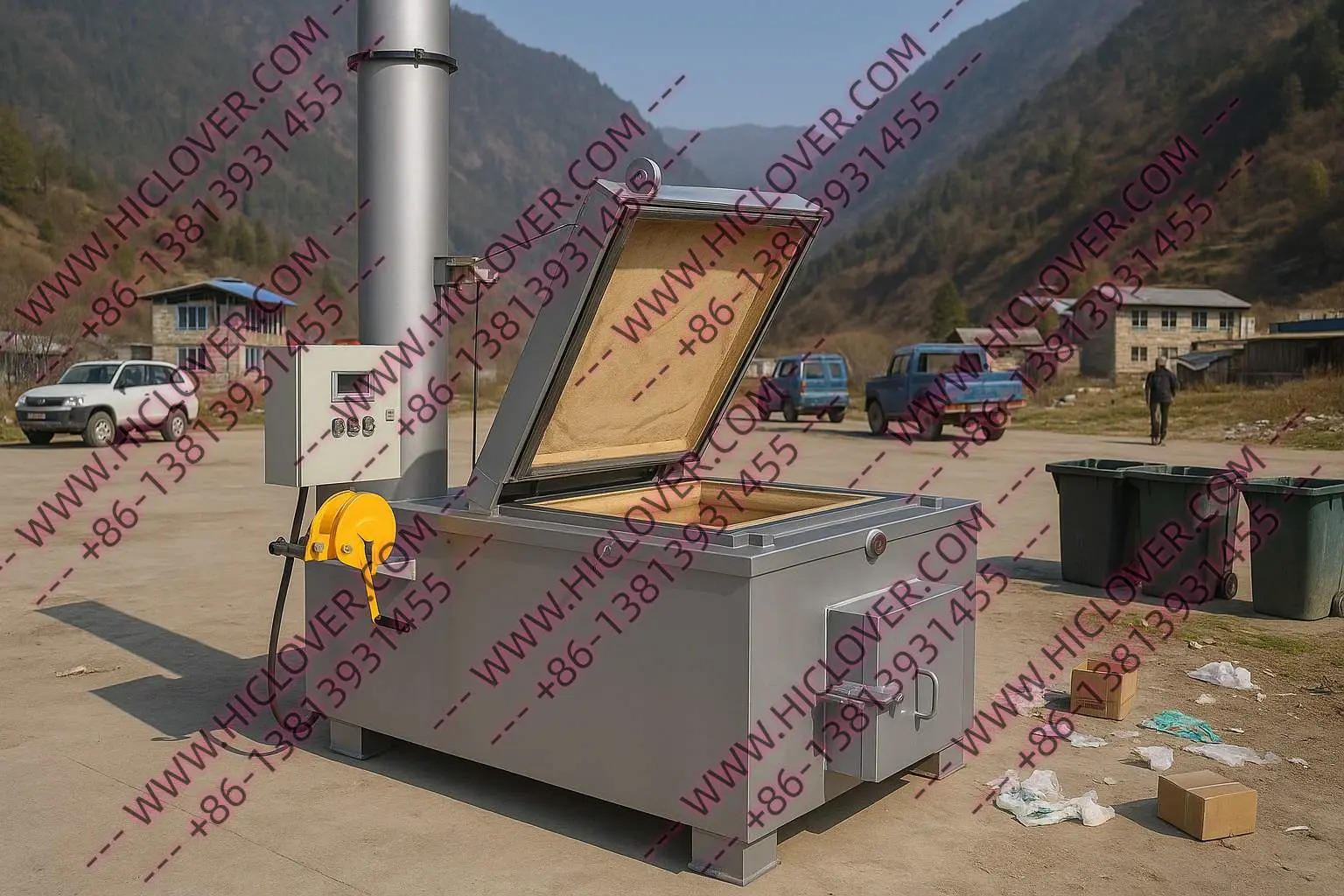
HICLOVER Waste Incinerators: A Technical Comparison for Optimized Waste Management Solutions
Understanding Modern Waste Incineration Technologies
Modern **waste incinerators** are essential for compliant and efficient waste management, especially concerning hazardous and infectious materials. These systems rely on controlled high-temperature combustion to reduce waste volume and neutralize harmful pathogens. The selection of a suitable incinerator requires careful consideration of waste type, volume, and regulatory requirements. Meeting stringent emission standards, such as those outlined by the WHO and EU emission frameworks, demands advanced engineering and design. This includes precise control over combustion temperatures, typically ranging from 850°C to 1100°C, and effective flue gas treatment. Long-tail variations, such as maintaining appropriate **medical incinerator operating temperature standards**, are critical for complete destruction of pathogens and minimizing harmful emissions. HICLOVER emphasizes engineering reliability in its incinerator designs.
The core principle behind effective waste incineration is complete thermal oxidation. This involves subjecting waste to high temperatures in an oxygen-rich environment to convert it into ash, flue gas, and heat. The process is significantly enhanced by employing a dual-chamber design. In a dual-chamber incinerator, the primary chamber facilitates the initial combustion, while the secondary chamber ensures complete burning of the remaining gases and particulate matter. High temperature retention in the secondary chamber is vital for breaking down complex organic compounds and achieving optimal destruction efficiency. Factors influencing combustion include temperature, residence time, turbulence, and oxygen availability.
Fixed vs. Containerized Incinerator Systems
Incinerator systems are broadly classified into fixed and containerized (mobile) types. Fixed incinerators are stationary units typically installed at centralized waste management facilities. They offer high capacity and are suitable for handling large volumes of waste. However, their installation requires significant infrastructure and civil works. Containerized incinerators, on the other hand, are pre-fabricated, modular systems housed within shipping containers. These are also known as mobile incinerators or modular incinerators. Their key advantage lies in their portability and ease of deployment. They can be rapidly transported to remote locations or areas with limited infrastructure, making them ideal for decentralized waste management. HICLOVER specializes in containerized modular systems, offering ease of transport and rapid deployment.
The choice between fixed and containerized systems depends on specific operational needs. For instance, in crisis zones or humanitarian camps, where rapid deployment and flexibility are paramount, containerized incinerators offer a distinct advantage. Similarly, remote mining or oil camps often benefit from the mobility of containerized systems, eliminating the need for extensive on-site construction. Consider a remote mining operation in Gabon incineration, where infrastructure is limited; a containerized unit offers a plug-and-play solution. Conversely, for large urban centers with established waste management infrastructure, fixed incinerators may provide a more cost-effective and scalable solution. The rise in decentralized waste management initiatives is driving increased demand for containerized solutions.
Control and Emission Management Technologies
Advanced control systems are crucial for optimizing incinerator performance and ensuring compliance with environmental regulations. Programmable Logic Controllers (PLCs) offer automated control over various process parameters, including temperature, airflow, and waste feed rate. PLC automation enhances operational efficiency, reduces the risk of human error, and facilitates remote monitoring and control. Manual control systems, while less sophisticated, offer a more hands-on approach and may be suitable for smaller operations with limited budgets. The selection of a control system should align with the complexity of the incineration process and the level of automation desired. PLC-controlled automatic waste incinerators, like those offered by HICLOVER, are becoming increasingly popular due to their streamlined efficiency. HICLOVER offers both PLC and manual control options to meet diverse customer needs.
Effective flue gas treatment is essential for minimizing air pollution and meeting stringent emission standards. Dry scrubbers and wet scrubbers are two common technologies used for removing pollutants from flue gas. Dry scrubbers use chemical reagents, such as lime or activated carbon, to neutralize acidic gases and adsorb particulate matter. They are relatively simple to operate and generate dry solid waste, which requires disposal. Wet scrubbers, on the other hand, use liquid solutions to absorb pollutants and capture particulate matter. They offer higher removal efficiencies but generate wastewater, which requires treatment. The choice between dry and wet scrubbers depends on the specific pollutants present in the flue gas and the desired level of emission control. HICLOVER offers optional wet or dry scrubbers to customize emission control based on client requirements. You can explore options such as medical waste incinerator secondary chamber temperature standard at: [https://www.google.com/search?q=medical+incinerator+secondary+chamber+temperature+standard](www.google.com/search?q=medical+incinerator+secondary+chamber+temperature+standard)
HICLOVER’s Market Positioning and Customer Benefits
HICLOVER distinguishes itself in the market through its focus on engineering excellence, reliable supply chain, and customer-centric approach. As a direct factory supplier, HICLOVER offers competitive pricing and customizable solutions to meet specific customer requirements. The company’s extensive engineering experience, spanning over 16 years in the **waste incinerators** industry, enables it to deliver efficient and cost-effective waste management systems. HICLOVER’s factory manufacturing capability ensures high-quality construction and adherence to international standards. Furthermore, the company’s stable supply chain guarantees timely delivery of components and spare parts, minimizing downtime and maximizing operational efficiency. HICLOVER’s website, [https://www.hiclover.com/](www.hiclover.com/), provides detailed information on their product range and services.
HICLOVER offers a range of waste incinerators designed for diverse applications, including medical waste disposal, animal waste management, and general solid waste incineration. The company’s containerized mobile incinerators are particularly well-suited for remote sites and emergency situations, where rapid deployment is critical. HICLOVER’s multi-fuel incinerators, capable of operating on diesel, LPG, or natural gas, offer flexibility and adaptability to local fuel availability. The company’s dual combustion chamber design ensures complete combustion and minimizes emissions. HICLOVER’s commitment to customer satisfaction extends beyond product delivery, with comprehensive after-sales support and maintenance services. Consider the **Benin animal incinerator price**; HICLOVER provides competitive pricing and tailored solutions.
Containerized Mobile Incinerators: A Closer Look
The containerized mobile incinerator represents a significant advancement in waste management technology. Its core advantages include rapid deployment, ease of transportation, and minimal site preparation. These systems are pre-fabricated and tested in the factory, ensuring quick installation and commissioning on-site. The mobile plug-and-play design simplifies setup and reduces the need for specialized labor. Containerized incinerators are particularly valuable in situations where permanent infrastructure is not feasible or readily available. In response to global infectious disease preparedness efforts, containerized incinerators offer a vital tool for managing potentially hazardous waste in affected areas.
HICLOVER’s containerized mobile incinerators incorporate advanced features such as PLC automation, dual combustion chambers, and optional wet or dry scrubbers. The PLC control system optimizes combustion parameters, ensuring efficient waste destruction and minimal emissions. The dual combustion chambers ensure complete burning of gases and particulate matter, further reducing air pollution. The optional wet or dry scrubbers provide additional emission control, meeting stringent environmental regulations. HICLOVER’s experienced engineers provide customized solutions, taking into account factors such as waste composition, volume, and local environmental regulations. For example, in **Mozambique incinerator sales**, HICLOVER provides comprehensive support including incinerator installation demo.
Conclusion
Choosing the right **waste incinerators** system requires a thorough understanding of technical specifications, regulatory requirements, and operational needs. HICLOVER, as a leading **China Medical Incinerator Manufacturer**, offers a comprehensive range of incinerators designed for diverse applications, from **small scale medical waste incinerator** needs to larger industrial requirements. With a focus on engineering excellence, reliable supply chain, and customer-centric approach, HICLOVER provides efficient and cost-effective waste management solutions for a sustainable future. From handling medical waste to offering solutions for **pet incinerators**, HICLOVER’s commitment to quality and innovation makes it a trusted partner in the global waste management industry. The need for resilient supply chains reinforces the value of partnering with direct manufacturers like HICLOVER.
Comments are closed